


-
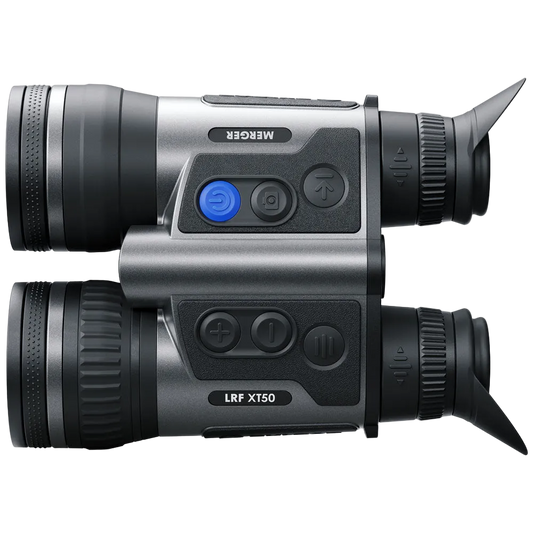
Merger LRF XT50 Thermal Binocular
Regular price $5,699.97Regular priceUnit price per -
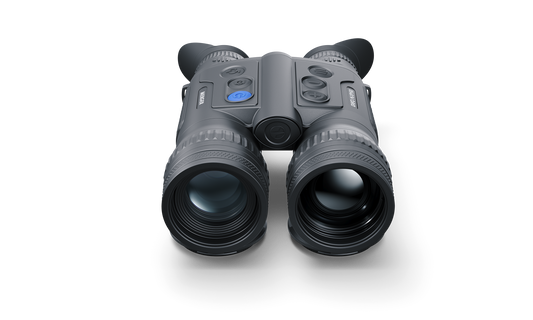
Merger LRF XP35 Thermal Binocular
Regular price $3,699.97Regular priceUnit price per -

 Sold out
Merger Duo NXP50 Thermal Binocular
Regular price $6,099.97Regular priceUnit price per -
Merger LRF XP50 Thermal Binocular
Regular price $5,898.97Regular priceUnit price per -

 Sold out
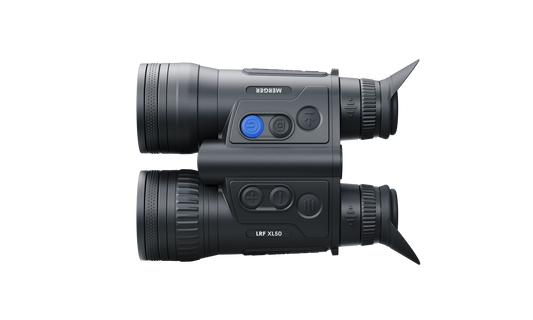
Merger LRF XL50 Thermal Binocular
Regular price $7,999.97Regular priceUnit price per

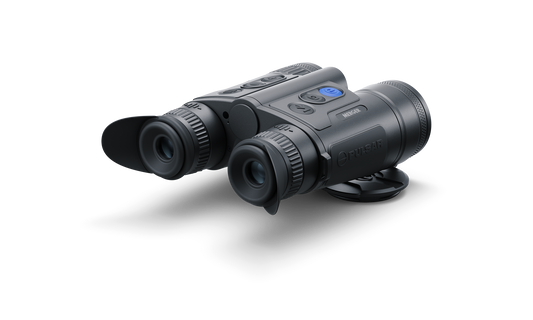


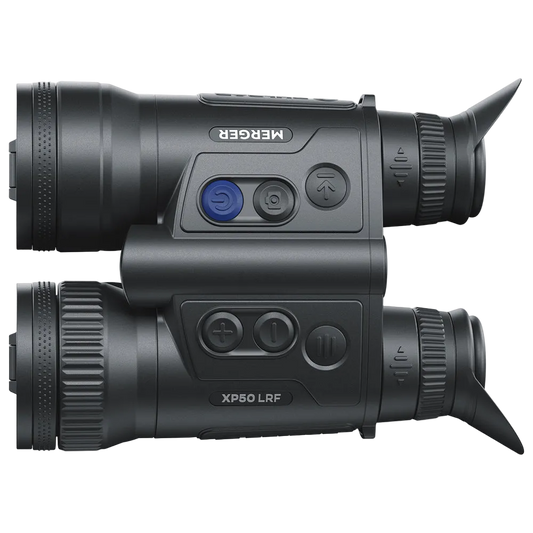

Best Thermal Binoculars for Hunting, Predator Observation, and Wildlife Tracking
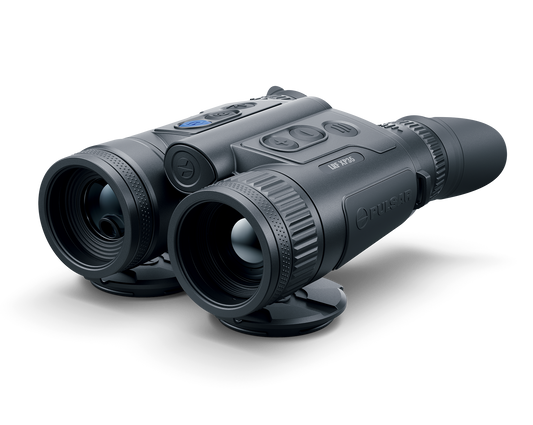
Pulsar’s Merger thermal binoculars give hunters and outdoor professionals a dependable way to see heat signatures in darkness, fog, and thick cover. Each model offers a natural binocular viewing experience, long-range thermal performance, and rugged construction built for real field work.
New to thermal? Start here:
For rifle-mounted thermal performance, explore our thermal riflescopes. For a compact, mobile detection tool, our thermal monoculars offer excellent flexibility. To add thermal to glass you already own, see our thermal attachments.
Buyer’s Guide: Choosing the Right Merger Thermal Binoculars
Choosing the right Merger comes down to how much distance you need, how wide a view you prefer, and whether a built-in laser rangefinder matters for your style of hunting.
Sensor Resolution
1280×1024 @ 12 µm (XT50) provides Pulsar’s highest level of detail and the strongest long-range performance.
1024×768 @ 12 µm (XL50) delivers HD detail with the same 2,515-yard reach as the XT50.
640×480 @ 17 µm (XP50, XP35, Duo NXP50) delivers sharp mid- to long-range imaging suitable for predator hunters and wildlife observers.
Pixel pitch matters as much as pixel count — see NETD explained for why sensor sensitivity decides how much of that resolution survives at distance.
Detection Range
Merger models detect a heat source from 1,350 yards on the XP35 out to 2,515 yards on the XT50 and XL50. Detection is not identification, and it is not an ethical shot. Before buying on range alone, read how far a thermal optic can really see.
Lens Diameter
Most Merger models use a 50 mm lens for long detection ranges. The XP35 uses a 35 mm lens for a wider field of view, making it better suited for timber, brush, and mixed terrain.
Laser Rangefinder (LRF)
Every Merger LRF model — the XT50, XL50, XP50, and XP35 — includes an integrated laser rangefinder for quick, accurate distance confirmation. The Duo NXP50 is the one model without an LRF; it trades ranging for a dual thermal and digital night-vision system. Our thermal vs. night vision guide explains what that second channel gives you.
Recording, Connectivity, and Build
All current Merger binoculars support onboard video and photo recording with Stream Vision 2 for transfer and live viewing. The chassis mirrors traditional daytime binoculars — intuitive controls, balanced weight, a comfortable grip for extended scanning. The XT50, XL50 and Duo NXP50 are IPX7-rated.
Merger Thermal Binoculars Model Comparison
| Model | Sensor Resolution | Detection Range | LRF | Weight | Best Use |
|---|---|---|---|---|---|
| Merger LRF XT50 | 1280x1024 @ 12 µm | 2,515 yd (2,300 m) | Yes | 32 oz (2 lb) | Open-field predator hunting, maximum detail at distance |
| Merger LRF XL50 | 1024x768 @ 12 µm | 2,515 yd (2,300 m) | Yes | 33.5 oz | Long-range detection with HD detail |
| Merger LRF XP50 | 640x480 @ 17 µm | 1,968 yd (1,800 m) | Yes | 28.2 oz — lightest | Balanced 50 mm reach in a lighter body |
| Merger LRF XP35 | 640x480 @ 17 µm | 1,350 yd (1,234 m) | Yes | 29.3 oz | Widest field of view — timber, brush, mixed terrain |
| Merger Duo NXP50 | 640x480 @ 17 µm thermal + 1920x1200 digital | 1,969 yd (1,800 m) | No | 42.3 oz | Wildlife observation and visual identification |
Predator Hunting and Night Hunting
Predator hunters spend far more time searching than shooting. The Merger series is built for that reality — long detection ranges, sharp imaging, and rugged housings.
- High-resolution sensors help detect small predators at long distances.
- LRF-equipped models provide precise ranging before you set up a shot.
- Weather-sealed housings handle rain, cold, fog, and hard field use.
- Binocular viewing reduces fatigue during long scanning sessions.
The Merger LRF XT50 is the top choice for open-field predator hunting. For mixed terrain or a lighter carry, the XP35 gives the widest field of view at 29.3 oz, and the XP50 is the lightest Merger at 28.2 oz while keeping the 50 mm objective.
Wildlife Observation and Property Surveillance
- 50 mm models detect from roughly 1,970 yards on the XP50 and Duo NXP50 out to 2,515 yards on the XT50 and XL50.
- Thermal imaging cuts through low light, light fog, or brush.
- Recordings support study, documentation, or land-management planning.
The Merger Duo NXP50 is especially useful for observation work, pairing a 640×480 thermal sensor with a 1920×1200 digital night-vision channel.
Tips for Optimizing Merger Thermal Binoculars
- Keep the objective lens clean for maximum clarity.
- Charge both batteries before night-long observation.
- Use lower magnification in dense areas, higher in open fields.
- Record scouting footage to understand recurring movement patterns.
- Experiment with different thermal color palettes for better contrast.
Frequently Asked Questions
What’s the difference between the Merger models?
The XT50 is the flagship with Pulsar’s highest-resolution 1280×1024 sensor. The XL50 matches its 2,515-yard reach with a 1024×768 HD sensor. The XP50 is the lightest at 28.2 oz and keeps the 50 mm objective. The XP35 offers the widest field of view for dense terrain. The Duo NXP50 adds digital night vision and is the only model without an LRF.
How far can they detect animals?
From 1,350 yards on the XP35 to 2,515 yards on the XT50 and XL50 — detection of a heat source, not identification of a species.
Do all Merger binoculars have a rangefinder?
Every LRF model does. The Duo NXP50 is the exception.
Why binoculars over a monocular?
Two eyes reduce fatigue and give a more natural sense of depth over long sessions. A monocular is lighter and leaves a hand free — our format guide covers the trade-off.
Can they be used during the day?
Yes. Thermal reads heat, not light. How thermal imaging works.