


-
Telos LRF XT50 Monocular
Regular price $4,699.97Regular priceUnit price per -
Telos LRF XL50 Thermal Monocular
Regular price $4,699.97Regular priceUnit price per -
Telos XL50 Thermal Monocular
Regular price $4,199.97Regular priceUnit price per -
Telos LRF XP50 Thermal Monocular
Regular price $3,699.97Regular priceUnit price per -
Telos XP50 Thermal Monocular
Regular price $3,199.97Regular priceUnit price per -
Telos LRF XG50 Thermal Monocular
Regular price $3,499.97Regular priceUnit price per$4,099.97Sale price $3,499.97Sale


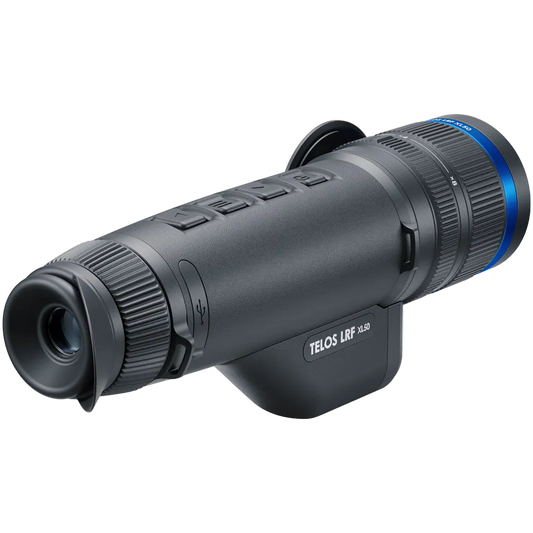

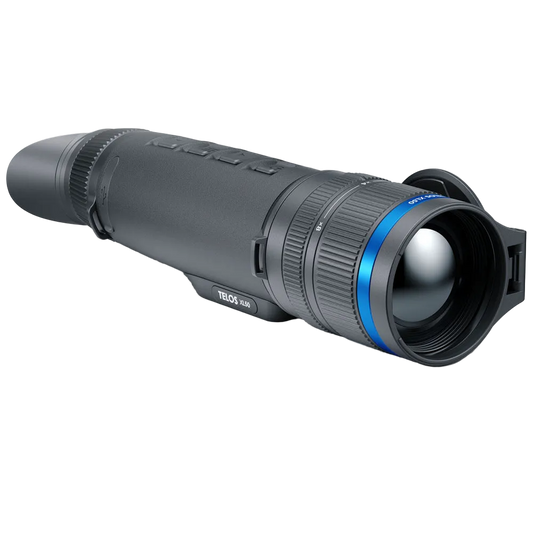

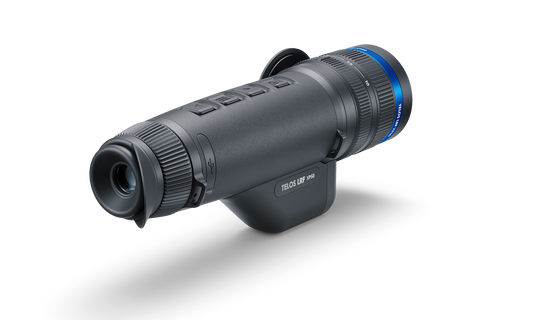

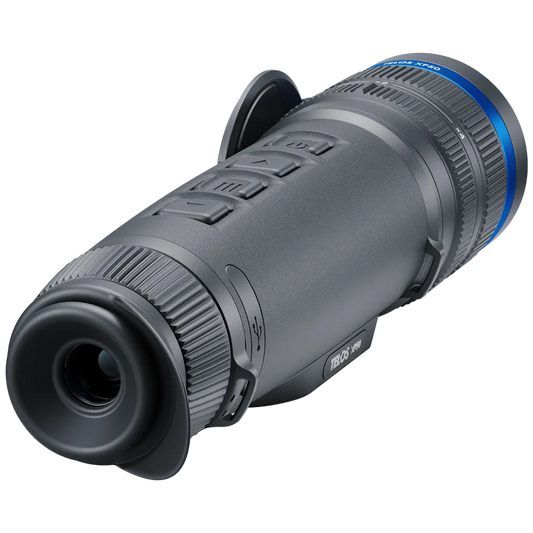

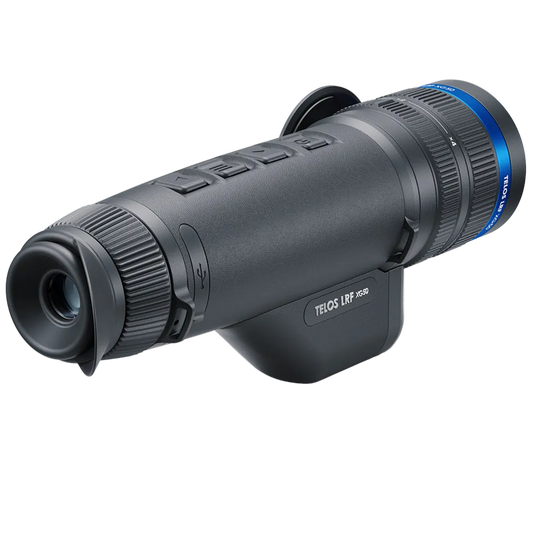
Pulsar Telos Modular Thermal Monoculars with Integrated LRF
The Pulsar Telos platform is built around adaptability. Designed as a modular thermal system, Telos optics deliver long-range detection, integrated laser rangefinding, and rugged ergonomics in a handheld monocular format suited for serious night hunting, scouting, and observation work.
New to thermal? Start here:
Other offerings: for rifle-mounted thermal, explore our thermal riflescopes. For a two-eyed view that reduces fatigue on long sits, see thermal binoculars. To add thermal to glass you already own, browse thermal clip-ons.
Buyer’s Guide: Choosing the Right Telos Model
Choosing the right Telos depends on how far you need to detect, how much detail you want at that distance, and whether you need ranging built in. Every Telos is a handheld monocular and they share one design philosophy: long-range performance, stable handheld use, and accurate ranging.
Sensor Resolution
Telos LRF XT50 uses a 1280×1024 @ 12 µm sensor, the highest-resolution option in the line. Telos LRF XL50 and Telos XL50 use 1024×768 @ 12 µm for excellent detail and strong digital zoom. Telos LRF XG50 pairs a 640×480 @ 12 µm sensor with a 50 mm objective, while the XP50 models use 640×480 @ 17 µm. Telos LRF XQ35 uses 384×288 @ 17 µm for a lighter, more compact setup.
Pixel pitch matters as much as pixel count — a 12 µm sensor resolves more detail at range than a 17 µm sensor of the same resolution. Our NETD explained guide covers how sensor sensitivity affects what you can actually make out.
Detection Range
Telos models detect a heat source from 1,422 yards on the LRF XQ35 out to 2,515 yards on the 50 mm models. Detection is not identification, and it is not an ethical shot. Before buying on range alone, read how far a thermal optic can really see.
Monocular Handling, and When You Want a Binocular
Every Telos model is a monocular. Telos prioritises mobility and one-handed operation, ideal for scouting ahead of a stalk or checking large areas quickly, and it keeps your other hand free for a rangefinder, rifle, or lead.
If you glass for long stretches and want both eyes engaged to reduce fatigue, that is a binocular job — see the Pulsar Merger line, built as a thermal binocular with the same integrated LRF capability.
Laser Rangefinder (LRF)
Any model with LRF in its name includes an integrated laser rangefinder, allowing precise distance measurement before transitioning to a riflescope or repositioning. The non-LRF XL50 and XP50 leave it out for a lower entry price.
Ergonomics and Modularity
The Telos platform is designed for balance and stability during handheld use. Its modular architecture supports future upgrades and serviceability, making it a long-term investment for users who rely heavily on thermal optics.
Telos Model Comparison
| Model | Sensor Resolution | Magnification | Detection Range | LRF | Best Use |
|---|---|---|---|---|---|
| Telos LRF XT50 | 1280x1024 @ 12 µm | 2–16x (Zoom Boost 24x) | 2,515 yd (2,300 m) | Yes | Highest resolution, maximum detail at distance |
| Telos LRF XL50 | 1024x768 @ 12 µm | 2.5–20x | 2,515 yd (2,300 m) | Yes | HD detail with precision ranging |
| Telos XL50 | 1024x768 @ 12 µm | 2.5–20x | 2,515 yd (2,300 m) | No | Same HD reach without the rangefinder |
| Telos LRF XG50 | 640x480 @ 12 µm | 3.5–14x | 2,515 yd (2,300 m) | Yes | Long-range glassing, reduced eye fatigue |
| Telos LRF XP50 | 640x480 @ 17 µm | 2.5–10x | 1,969 yd (1,800 m) | Yes | Balanced all-around detection and ranging |
| Telos XP50 | 640x480 @ 17 µm | 2.5–10x | 1,969 yd (1,800 m) | No | Mid-range detection, entry point to the platform |
| Telos LRF XQ35 | 384x288 @ 17 µm | 3–12x | 1,422 yd (1,300 m) | Yes | Mobile scanning, mixed terrain, efficient runtime |
Extended Use Cases
Night Hunting and Scouting
- Locate animals before they move into shooting range.
- Range targets accurately before setting up a shot.
- Scan wide areas without pointing a rifle at anything.
Long Observation Sessions
- Brace against a rest or shooting stick to steady the image during extended sits.
- Maintain situational awareness through the night.
- Record movement patterns for future planning.
Land Management and Property Monitoring
- Check large properties, fence lines, and fields at night.
- Document wildlife activity or trespassers.
- Operate reliably in fog, cold, and low-visibility conditions.
Tips for Optimizing Telos Performance
- Scan at lower magnification to maintain field of view.
- Use the LRF to confirm distance before repositioning.
- Switch palettes to improve contrast in changing terrain.
- Carry spare batteries for extended nights in the field.
- Record scouting footage to review patterns later.
Frequently Asked Questions
Is there a Telos binocular?
No — every Telos is a monocular. For a two-eyed thermal, see the Merger binocular line.
What does LRF mean on a Telos?
A built-in laser rangefinder for confirming distance before you move or shoot. Models without LRF in the name leave it out to save weight and cost.
How far can a Telos detect?
From 1,422 yards on the LRF XQ35 to 2,515 yards on the 50 mm models — detection of a heat source, not identification of a species. Detection range explained.
Which Telos has the best image quality?
The LRF XT50 (1280×1024 @ 12 µm), then the XL50 models at 1024×768. Both hold detail better under digital zoom.
Can a Telos be used during the day?
Yes. Thermal reads heat, not light. How thermal imaging works.