


-

 Sold out
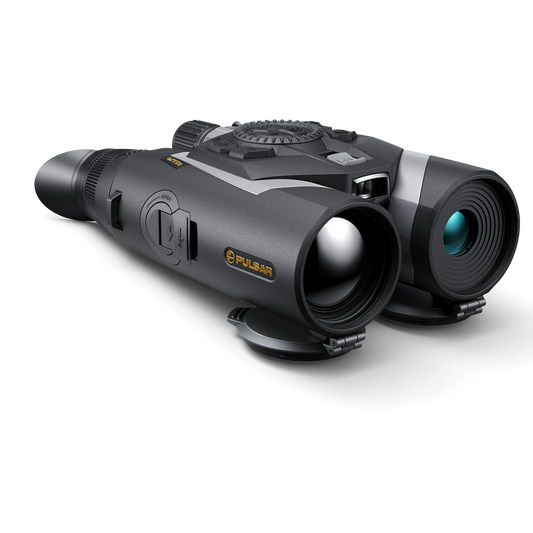
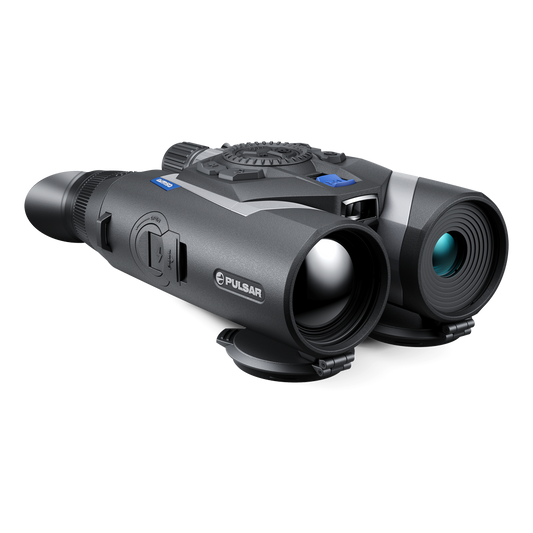
Symbion LRF DXT50
Regular price $8,199.97Regular priceUnit price per -
Symbion LRF DXR50
Regular price $6,199.97Regular priceUnit price per -
Merger LRF XP50 Thermal Binocular
Regular price $5,898.97Regular priceUnit price per -
Merger LRF XP35 Thermal Binocular
Regular price $3,699.97Regular priceUnit price per -

 Sold out
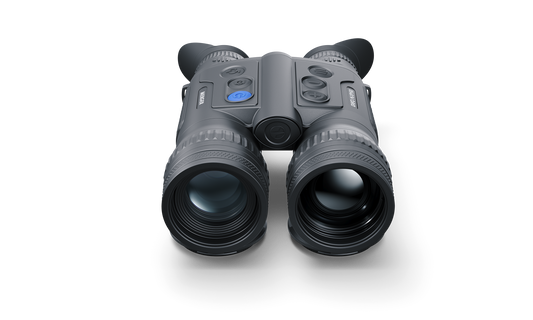
Merger Duo NXP50 Thermal Binocular
Regular price $6,099.97Regular priceUnit price per -

 Sold out
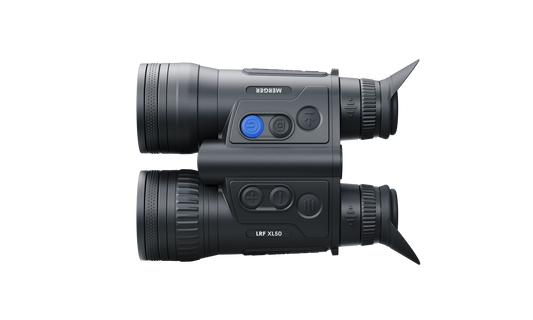
Merger LRF XL50 Thermal Binocular
Regular price $7,999.97Regular priceUnit price per



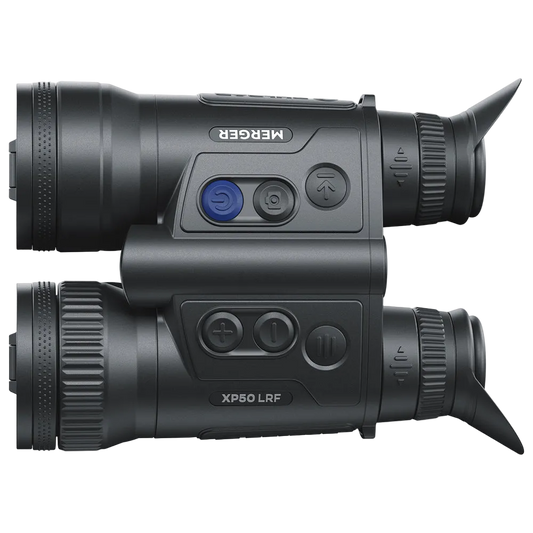
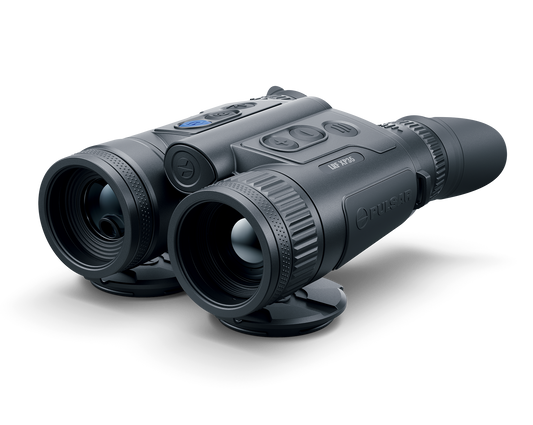
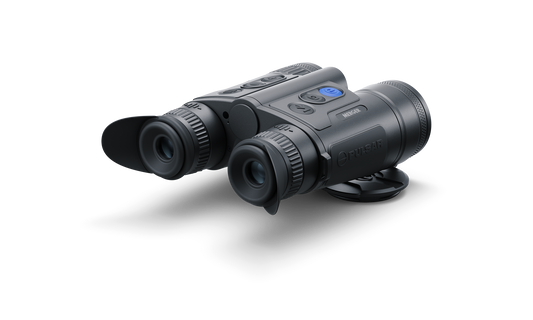


Thermal Binoculars for Hunting, Predator Observation, and Night Surveillance
Pulsar thermal binoculars let you scan with both eyes, which is the difference between glassing comfortably for hours and giving up after twenty minutes. Two families sit in this category: the Merger line, purpose-built thermal binoculars covering everything from wide-field brush work to 2,515-yard open-country detection, and the Symbion line, multispectral units that pair a thermal channel with a digital day/night channel in one housing.
New to thermal? Start here:
If you are still deciding on a format, our thermal scope vs. thermal monocular guide covers the trade-offs, and thermal vs. night vision explains why the Symbion carries both.
Other offerings: for rifle-mounted thermal performance, explore our thermal riflescopes. For a compact, mobile detection tool, our thermal monoculars offer excellent flexibility. To add thermal to glass you already own, see our thermal attachments.
Buyer’s Guide: Choosing Thermal Binoculars
Do you need one spectrum or two?
Merger models are thermal-only (with the exception of the Duo NXP50, which adds digital night vision). They are the lighter choice and the right one if your job is finding heat.
Symbion models are multispectral: a thermal channel for detection plus a digital channel for visual identification, switchable in the field. If you need to tell what you are looking at — not just that something warm is there — that second channel is the reason to carry the extra weight.
Sensor Resolution
1280×1024 @ 12 µm (Merger LRF XT50, Symbion LRF DXT50) is the highest detail available and holds up best under digital zoom.
1024×768 @ 12 µm (Merger LRF XL50) delivers HD detail with the same 2,515-yard reach.
640×480 @ 12 µm (Symbion LRF DXR50) and 640×480 @ 17 µm (Merger XP50, XP35, Duo NXP50) cover mid- to long-range work. The 12 µm pixel pitch resolves more detail at distance than 17 µm at the same resolution — our NETD explained guide covers why sensor sensitivity matters as much as pixel count.
Detection Range
Detection ranges in this category run from 1,350 yards on the wide-field Merger LRF XP35 to 2,515 yards on the XT50, XL50, and both Symbion models. Detection is not identification, and it is not an ethical shot. For what these numbers actually mean in the field, read how far a thermal optic can really see.
Lens Diameter
Most models here use a 50 mm objective for maximum detection range. The Merger LRF XP35 uses a 35 mm lens for a noticeably wider field of view — the better choice in timber, brush, and mixed terrain where targets appear close and move fast.
Laser Rangefinder (LRF)
Every model in this category includes an integrated laser rangefinder except the Merger Duo NXP50, which trades ranging for its dual thermal and digital night-vision system.
Ergonomics and Power
Merger units run a dual Li-Ion system (internal pack plus a removable APS3), giving 6–10 hours depending on model. Symbion units run the larger APS5 pack for 8–10 hours. All of them mirror the handling of traditional daytime binoculars, with balanced weight and intuitive controls for extended scanning.
Thermal Binocular Model Comparison
| Model | Type | Sensor Resolution | Detection Range | LRF | Weight | Battery Life | Best Use |
|---|---|---|---|---|---|---|---|
| Symbion LRF DXT50 | Thermal + digital | 1280x1024 @ 12 µm | 2,515 yd (2,300 m) | Yes | 2.2 lb (35.2 oz) | 8 hrs | Detection and visual identification in one unit |
| Symbion LRF DXR50 | Thermal + digital | 640x480 @ 12 µm | 2,515 yd (2,300 m) | Yes | 2.2 lb (35.2 oz) | 10 hrs | Long-range dual-spectrum observation, longest runtime |
| Merger LRF XT50 | Thermal | 1280x1024 @ 12 µm | 2,515 yd (2,300 m) | Yes | 32 oz (2 lb) | 6 hrs | Open-field predator hunting, maximum detail at distance |
| Merger LRF XL50 | Thermal | 1024x768 @ 12 µm | 2,515 yd (2,300 m) | Yes | 33.5 oz | 8 hrs | Long-range detection with HD detail |
| Merger LRF XP50 | Thermal | 640x480 @ 17 µm | 1,968 yd (1,800 m) | Yes | 28.2 oz — lightest here | 10 hrs | Balanced 50 mm reach in a lighter body |
| Merger LRF XP35 | Thermal | 640x480 @ 17 µm | 1,350 yd (1,234 m) | Yes | 29.3 oz | 9 hrs | Widest field of view — timber, brush, mixed terrain |
| Merger Duo NXP50 | Thermal + digital | 640x480 @ 17 µm thermal + 1920x1200 digital | 1,969 yd (1,800 m) | No | 42.3 oz | 7 hrs | Wildlife observation and visual identification |
Extended Use Cases
Predator and Night Hunting
- Scan wide areas without pointing a rifle at anything.
- Confirm distance with the integrated LRF before repositioning.
- Both eyes engaged means you can glass for hours instead of minutes.
Wildlife Observation and Land Management
- Observe nocturnal wildlife without visible light disturbing behavior.
- Check fence lines, fields, and livestock across large acreage.
- Record footage for study, documentation, or land-management planning.
When Identification Matters
- Symbion and Merger Duo models switch to a digital channel for visual detail.
- Useful for ranch work, research, and anywhere "what is it" matters as much as "is something there".
Tips for Getting the Most From Thermal Binoculars
- Keep the objective lens clean — smudges cost you more range than any setting.
- Charge both the internal and removable packs before a full night out.
- Scan at low magnification to hold field of view, then zoom to inspect.
- Switch palettes as terrain and humidity change; contrast is not fixed.
- Record scouting footage and review it for recurring movement patterns.
Frequently Asked Questions
What is the difference between Merger and Symbion?
Merger units are thermal binoculars built for detection and ranging. Symbion units are multispectral — a thermal channel plus a digital day/night channel in one housing — for users who need to identify what they have found, not only detect it.
How far can thermal binoculars detect animals?
From 1,350 yards on the Merger LRF XP35 to 2,515 yards on the XT50, XL50, and both Symbion models. These figures refer to detecting a heat source, not identifying a species. See detection range explained.
Why choose binoculars over a thermal monocular?
Binocular viewing reduces eye fatigue and gives a more natural sense of depth, which matters when you glass for hours. A monocular is lighter and leaves a hand free. Our format comparison guide walks through it.
Do they support recording and WiFi?
Yes. Every model includes onboard photo and video recording plus WiFi via the Stream Vision 2 app.
Can they be used in poor weather or during the day?
Yes to both. Thermal sensors read heat rather than light, so they work in fog, light rain, cold, and full sunlight. Heavy precipitation reduces contrast. The Symbion models are IP67-rated; the Merger XT50, XL50, and Duo NXP50 are IPX7-rated.