
1
Spot-and-Stalk Hunting
Check timber edges, basins, trails and open slopes while keeping both the rifle and the hunter's attention available for safe movement through uneven ground.
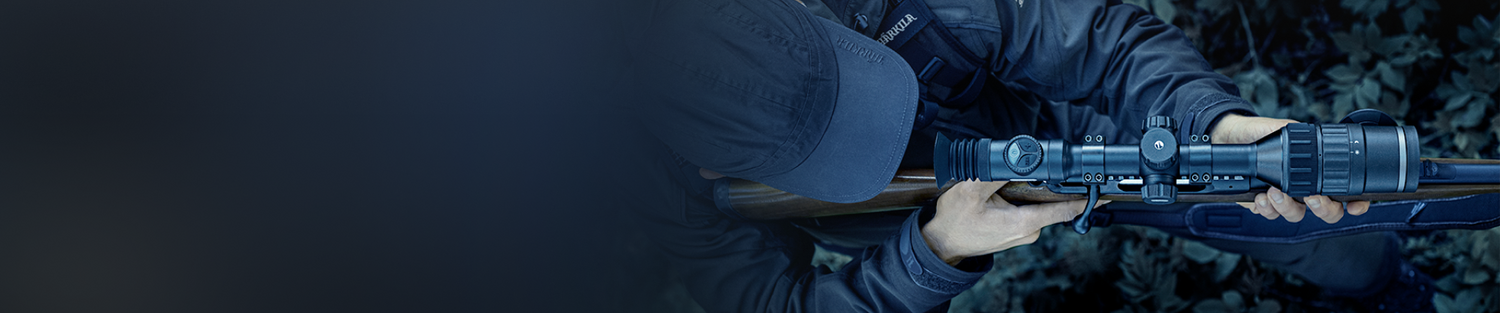
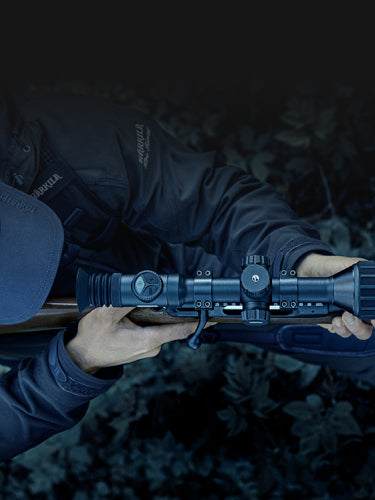
A thermal monocular is built to scan, detect and range without raising a rifle. A thermal riflescope is built to hold zero, confirm the target and place the shot. Hunters get the best results when each optic handles the job it was designed to do.
A thermal monocular is designed for repeated, wide-area observation. Its compact housing, one-handed controls and lower carrying weight make it easy to raise, scan and lower while walking a property, moving between stands or checking several fields during the same night.
Lower base magnification and a wider field of view help the hunter cover more terrain with each sweep. Instead of concentrating on a narrow aiming window, the user can check fence lines, timber edges, draws, feeder approaches and open ground for heat signatures. A monocular can also be used from a truck, blind or tripod without tying every observation to the rifle.
A thermal riflescope can show the same heat signatures as a monocular, but its design priorities are different. The scope is mounted to a firearm, aligned with the bore and built around reticle precision, zero retention and a shooting position. Those strengths become disadvantages when the optic is used for constant searching.
Every sweep of the image also sweeps the muzzle. On ranches and mixed-use properties, the rifle may pass across livestock, equipment, structures, roads or another person before the hunter knows what produced the heat signature. The narrower field of view common to higher-magnification riflescopes also makes broad searching slower and easier to miss movement at the edges.
Mobile hunting rewards an optic that can be carried, raised and used repeatedly without controlling the rifle. This matters for hunters covering wilderness terrain on foot and for professionals moving between farms, ranches or leases during pest and predator control.
Check timber edges, basins, trails and open slopes while keeping both the rifle and the hunter's attention available for safe movement through uneven ground.
Scan several fields quickly, track moving animals and confirm whether a heat signature is a hog, coyote, livestock animal or person before preparing the rifle.
Observe fences, equipment, cattle and remote corners of a property without illuminating the area or pointing a firearm toward routine nighttime activity.
A riflescope earns its place when the hunter settles into a blind, watches a feeder or covers a known lane of travel. The optic stays mounted, zeroed and aligned with the rifle. A tripod, shooting rest or stable rail supports longer observation without forcing the hunter to rebuild the shooting position when the target appears.
From a fixed position, the riflescope's higher magnification, reticle, laser rangefinder and ballistic tools become useful rather than restrictive. The hunter is no longer sweeping an unknown area. The field of fire is established, the background is known and the rifle can remain oriented toward the limited area where a legal target is expected to enter.
Hunters ready to compare specific rifle-mounted options can use the Best Pulsar Thermal Scopes guide to match current models to hog hunting, predator hunting, long-range use, mobility and low-contrast conditions.
A dedicated mount keeps the thermal optic aligned with the rifle and ready to use without transferring a handheld device onto the weapon.
Reticles, zeroing profiles and controlled magnification support identification and shot placement after the target enters a known shooting lane.
LRF-equipped scopes can measure distance and apply ballistic data without making the hunter shift between several devices before the shot.
The deciding question is not which optic is more advanced. It is which task the optic needs to perform. Monoculars prioritize searching and handling. Riflescopes prioritize mounting, aiming and recoil resistance.
| Feature | Thermal Monocular | Thermal Riflescope |
|---|---|---|
| Primary job | Detect, scan, observe and range | Identify, aim and engage |
| How it is carried | Handheld, pocketed, neck-strapped or tripod-mounted | Mounted to a rifle with rings or a rail mount |
| Field of view | Usually wider for faster searching | Often narrower to support aiming and distance |
| Magnification | Generally lower at base magnification | Generally higher for target detail and shot placement |
| Reticle and zero | No weapon zero required | Reticle, zeroing profiles and weapon-specific setup |
| Recoil resistance | Not designed around firearm recoil | Built and tested for recoil on supported calibers |
| Best hunting style | Walking, scouting, tracking and multi-property control | Stand hunting, blinds, feeders and confirmed engagements |
| Safety advantage | Allows observation without pointing a firearm | Keeps the aiming and shooting system in one optic once the target is confirmed |
Pulsar's current handheld lineup covers compact scanning, rugged one-handed field use and premium long-duration observation. Choose the family by size, field of view, sensor class, rangefinder needs and expected time behind the eyepiece.
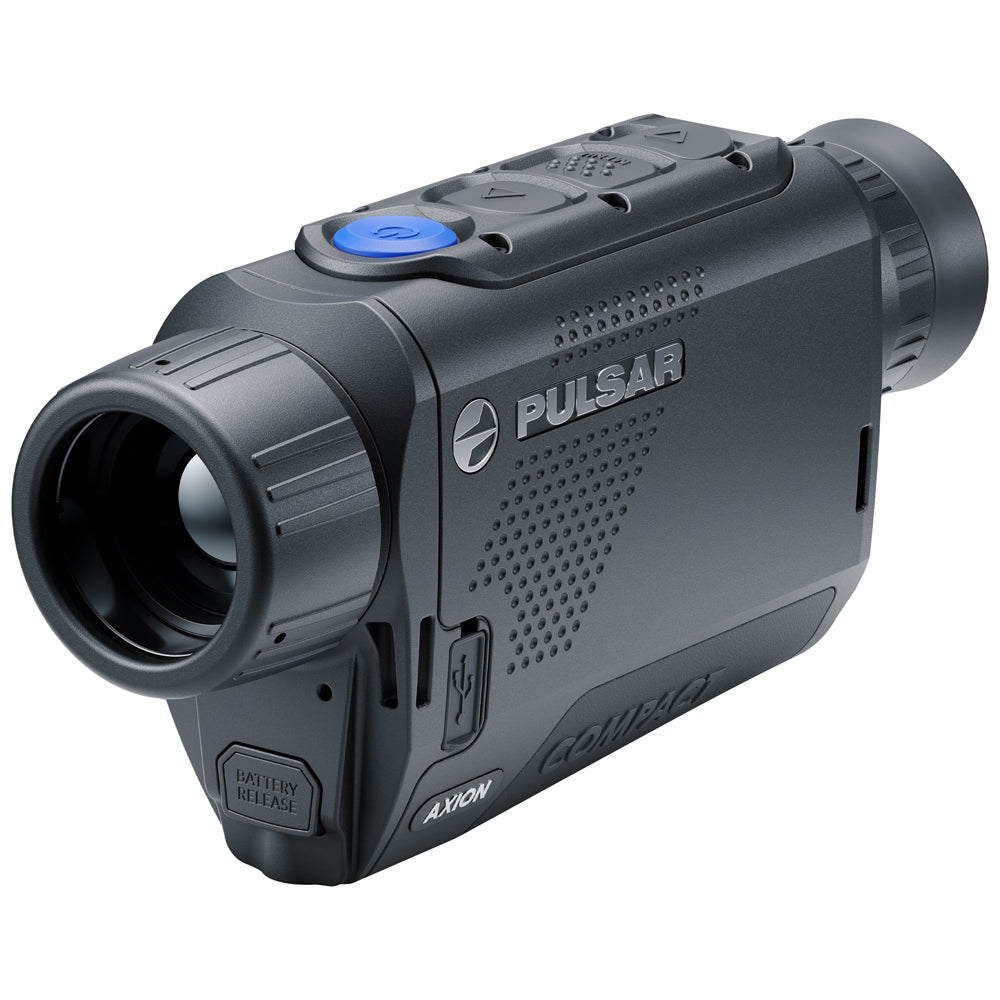
Pulsar's compact handheld family includes pocket-sized Axion Compact models and Axion 2 configurations with sensor and rangefinder options for fast, frequent scanning.
Best for: Lightweight carry, first-time thermal users and hunters who cover ground.
Explore Axion Monoculars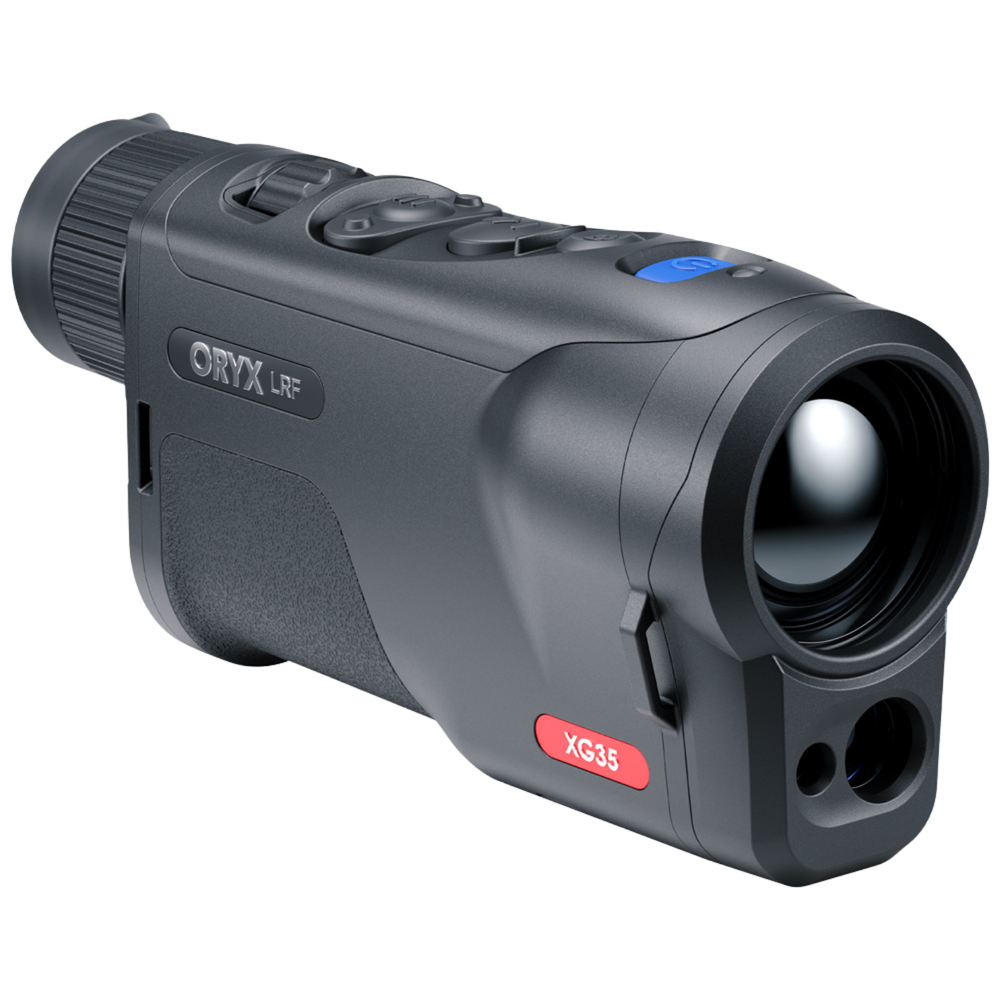
Oryx combines one-handed controls, electronic image stabilization, long battery life and an extended-range laser rangefinder in a rugged handheld platform.
Best for: Long nights, moving observation and professional pest or predator control.
Explore Oryx Monoculars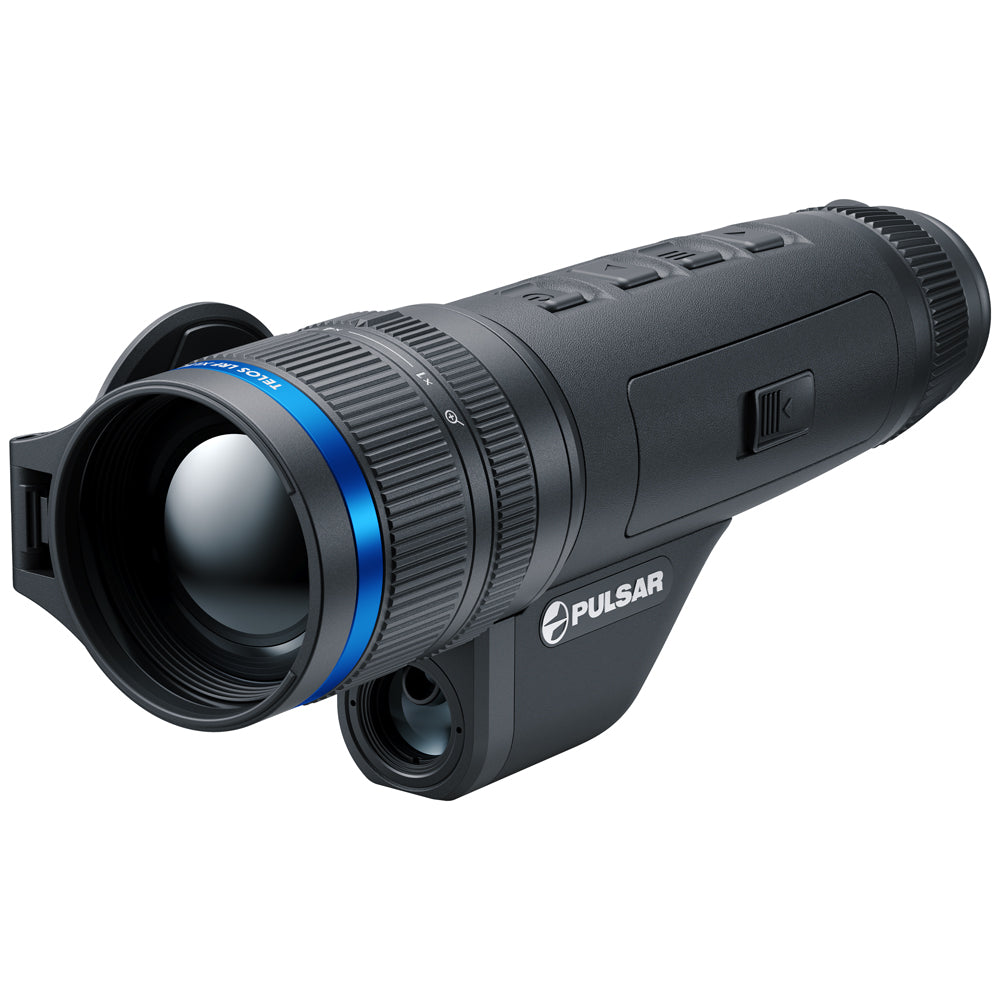
Telos is Pulsar's premium modular handheld platform, offered across multiple sensor classes with LRF and non-LRF configurations for demanding observation.
Best for: Premium image quality, long-range detection and extended glassing.
Explore Telos MonocularsWhere Krypton 2 fits: Krypton 2 can be converted into a handheld thermal monocular with the appropriate eyepiece, but Pulsar classifies the platform primarily as a thermal front attachment. It is therefore kept outside the dedicated monocular families in this comparison.
Pulsar's riflescope families cover compact rail-mounted hunting rifles, rugged professional platforms and traditional 30mm scope bodies. The right family depends on rifle setup, mounting preference, magnification, field of view and whether an integrated laser rangefinder is required.
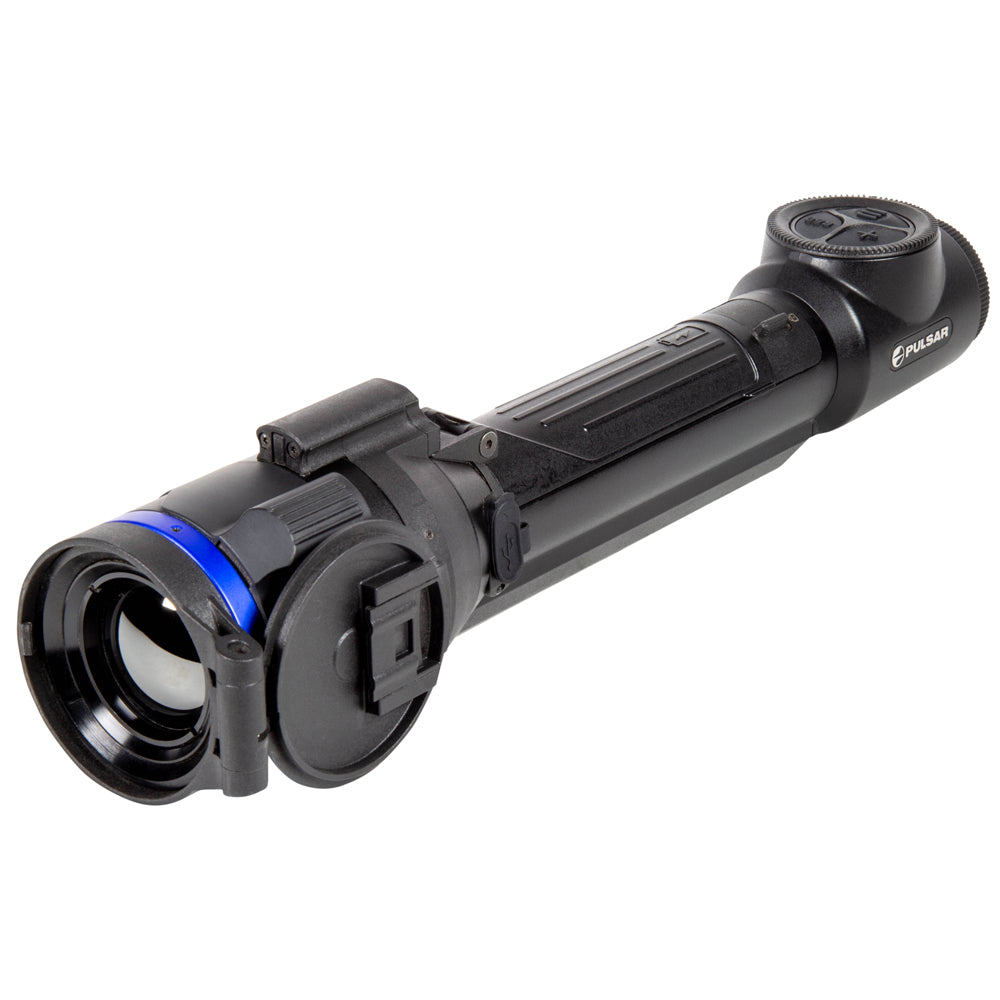
Talion places Pulsar thermal performance in a compact rail-mounted body suited to lightweight rifles, mobile predator hunting and fast handling in confined blinds.
Best for: Lightweight rifle builds, stalking and practical mid-range engagements.
Explore Talion Riflescopes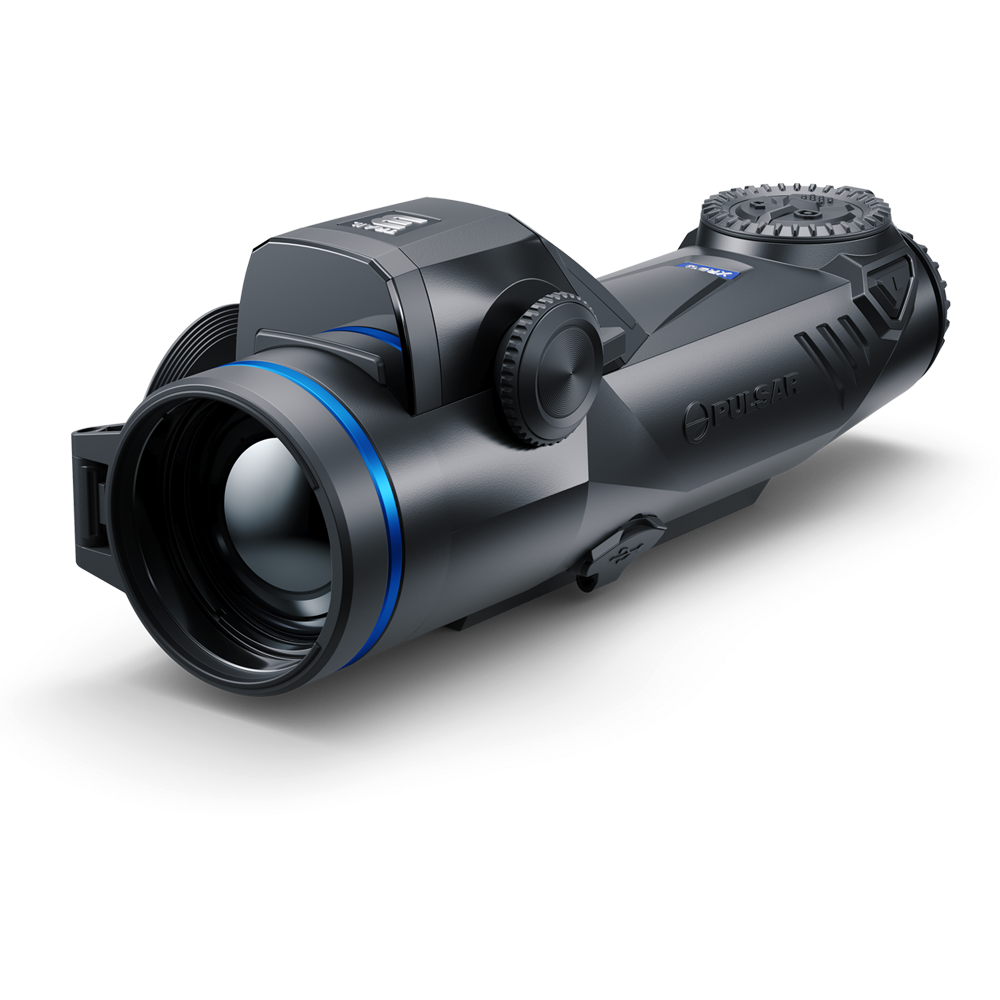
Trail 3 uses a rugged monoblock rail-mounted design with an integrated laser rangefinder, ballistic support and controls built for professional field use.
Best for: Repeated engagements, hard-use rifles and mid- to long-range hunting.
Explore Trail Riflescopes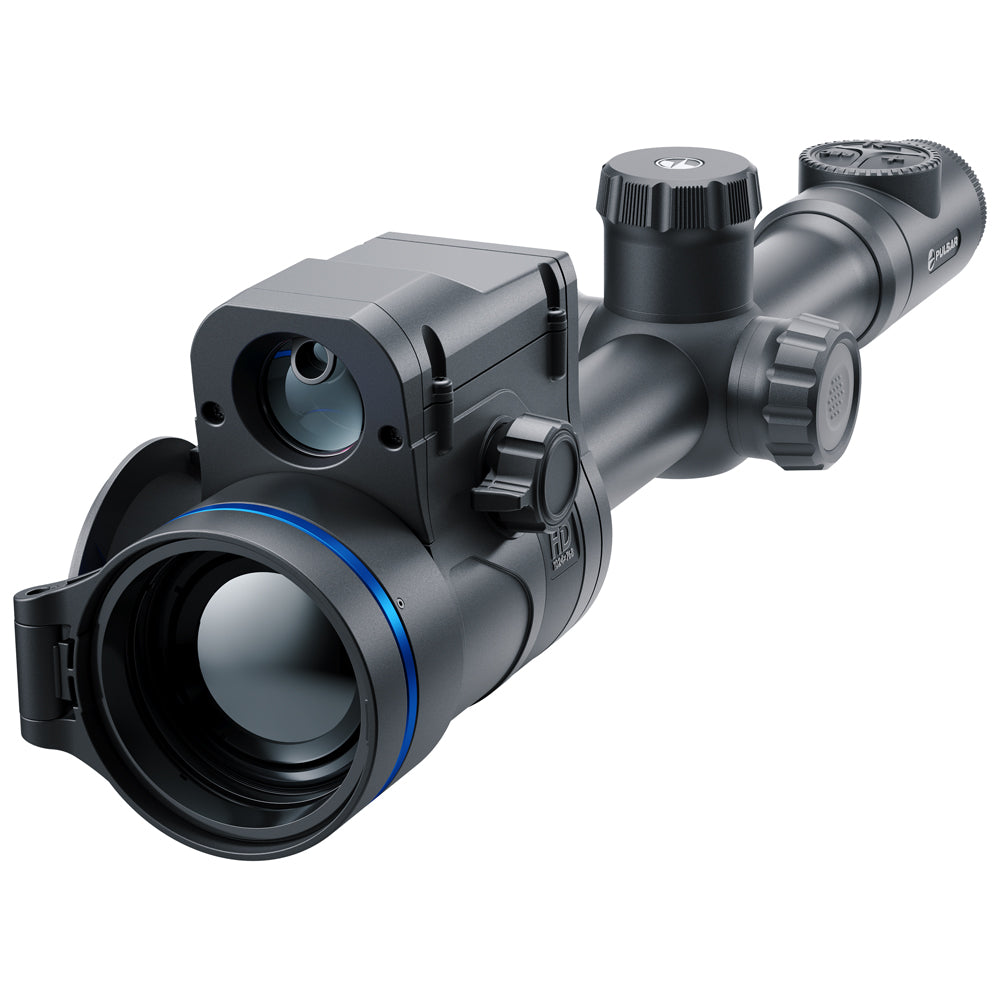
Thermion combines a familiar 30mm riflescope profile with Pulsar's broadest selection of thermal sensor classes, objective sizes and LRF-equipped configurations.
Best for: Traditional ring mounts, stand hunting and precise work across varied distances.
Explore Thermion RiflescopesA handheld thermal and a rifle-mounted thermal divide the hunt into clear stages. The monocular handles the repeated searching that takes most of the time. The riflescope stays dedicated to the brief period when the hunter may actually fire.
Use the monocular to cover terrain quickly and locate heat signatures.
Identify the animal, range it and check the background before raising the rifle.
Move to the riflescope only after the target and direction of fire are established.
Use the zeroed reticle, magnification, range and ballistic data to place the shot.
Hunters who scan frequently, move between properties or work around livestock benefit from carrying both. The monocular makes searching faster and safer, while the riflescope remains zeroed and ready for the shot. A riflescope alone can work from a tightly controlled stand, but it is a poor general-purpose scanner.
A detached riflescope can display thermal imagery, but it is heavier, shaped for mounting and normally needs to be reinstalled without disturbing zero. Once mounted, using it to scan means moving the rifle with every sweep. A dedicated monocular is the practical choice for handheld observation.
Yes. A monocular lets the hunter observe animals, people, vehicles and structures without pointing a firearm toward them. It does not replace muzzle discipline or target identification, but it separates routine observation from the act of aiming a rifle.
Buy the riflescope first when the immediate need is to make legal shots from a fixed, controlled setup and another safe scanning method is already available. Buy the monocular first when the main need is scouting, property observation or locating animals before deciding where and how to set up. For model-specific rifle-mounted recommendations, see the Best Pulsar Thermal Scopes guide.
No, but an integrated rangefinder is useful when fields are large, terrain is unfamiliar or the riflescope will use ballistic calculations. It lets the hunter measure distance while the rifle remains down and transfer that information into the shooting decision.
Start with the optic that solves the immediate job, then compare specific riflescopes or review the underlying thermal technology before moving into the product collections.

