


-
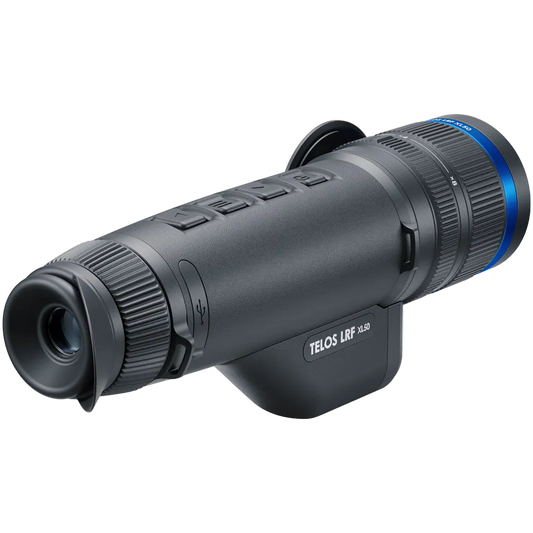
Telos LRF XL50 Thermal Monocular
Regular price $4,699.97Regular priceUnit price per -
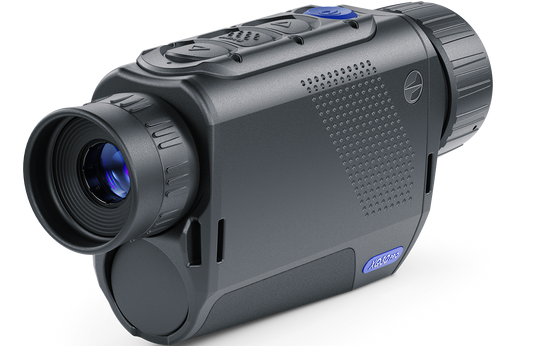
Axion XQ30 Pro Thermal Monocular
Regular price $1,799.97Regular priceUnit price per -

 Sold out
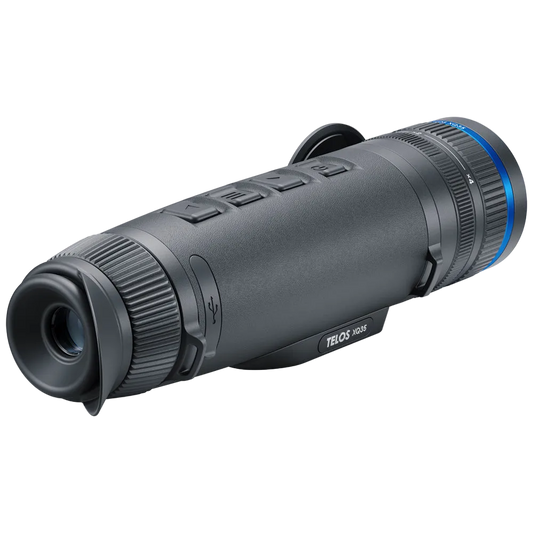
Telos XQ35 Thermal Monocular
Regular price $1,999.97Regular priceUnit price per$2,599.97Sale price $1,999.97Sold out -
Telos LRF XQ35 Thermal Monocular
Regular price $2,499.97Regular priceUnit price per$3,099.97Sale price $2,499.97Sale -
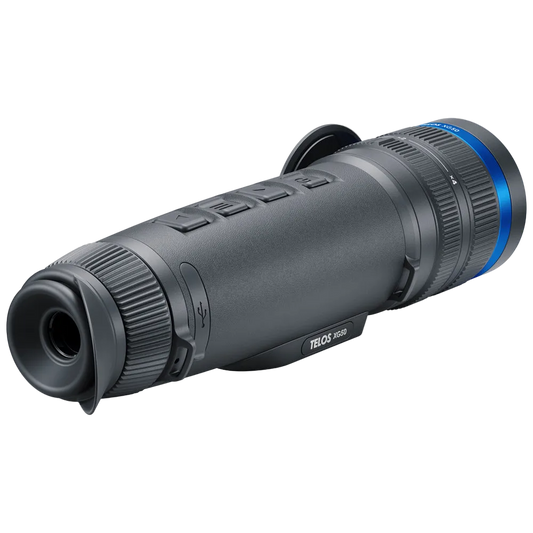
Telos XG50 Thermal Monocular
Regular price $2,999.97Regular priceUnit price per$3,599.97Sale price $2,999.97Sale -
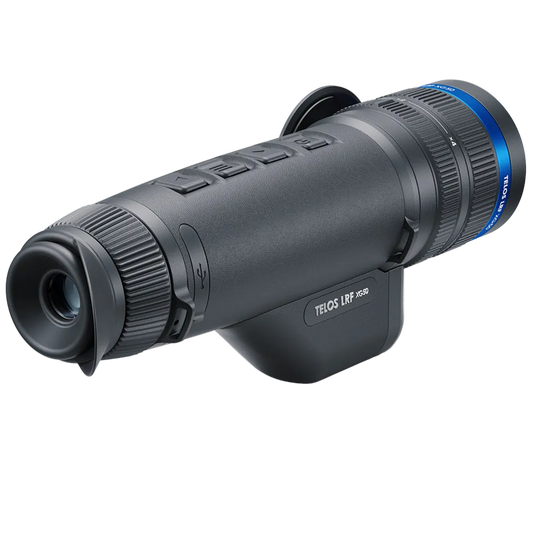
Telos LRF XG50 Thermal Monocular
Regular price $3,499.97Regular priceUnit price per$4,099.97Sale price $3,499.97Sale






Pulsar Thermal Monoculars for Scouting, Night Hunting, and Long-Range Detection
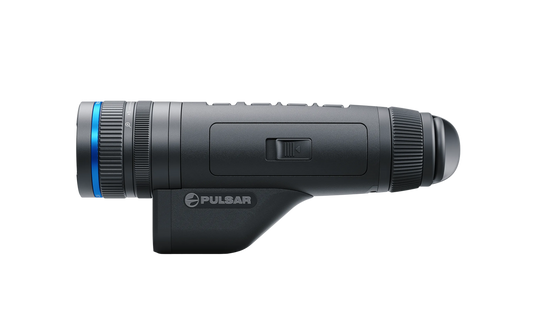
Pulsar’s thermal monoculars give hunters, landowners, and professionals a compact, one-handed way to detect heat signatures in total darkness. Whether you’re scanning for hogs, locating predators, checking property lines, or scouting ahead of a rifle-mounted optic, these handheld units deliver clarity, portability, and long-range detection well beyond traditional night vision. Three families sit in this category: Telos for modular long-range work, Oryx for stable handheld ranging, and Axion for compact, pocketable scanning.
New to thermal? Start here:
Not sure a monocular is the right format? Our thermal scope vs. thermal monocular guide covers when to scan with a handheld and when to mount, and thermal vs. night vision explains why thermal finds what night vision misses.
Other offerings: for rifle-mounted thermal capability, explore our thermal riflescopes. For a two-eyed viewing experience that reduces fatigue on long sits, see our thermal binoculars. To add thermal to a scope you already own, browse our thermal clip-ons.
Buyer’s Guide: Choosing the Right Pulsar Thermal Monocular
Choosing the best thermal monocular depends on how far you need to detect game, how wide a field of view you want, and whether a built-in laser rangefinder matters for how you hunt or scout.
Sensor Resolution
1280×1024 @ 12 µm (Telos LRF XT50) — Pulsar’s highest-resolution handheld sensor, for maximum detail and the strongest digital zoom performance.
1024×768 @ 12 µm (Telos LRF XL50, Telos XL50) — HD detail with the same 2,515-yard reach.
640×480 @ 12 µm (Oryx LRF XG35, Telos LRF XG50, Axion XG30) — excellent long-range capability with reliable detail.
640×480 @ 17 µm (Telos LRF XP50, Telos XP50) — proven mid- to long-range performance.
384×288 @ 17 µm (Axion XQ19, Axion XQ30 Pro, Telos LRF XQ35) — lightweight and efficient for short- to mid-range scanning.
Resolution is only half the story: pixel pitch and sensor sensitivity decide how much of that resolution survives at distance. Our NETD explained guide covers why a 12 µm sensor resolves more at range than a 17 µm sensor of the same pixel count.
Detection Range
Detection in this category runs from 820 yards on the pocket-sized Axion XQ19 to 2,515 yards on the Telos 50 mm models. Detection is not identification, and it is not an ethical shot. For what these numbers actually mean in the field, read how far a thermal optic can really see.
Magnification and Field of View
Wide-field models like the Axion XQ19 (1.5–6x) excel for close-range scanning in brush and tight terrain, where a narrow view costs you more than magnification gains. Higher base magnification models like the Oryx LRF XG35 and Telos LRF XL50 (both 2.5–20x) resolve finer detail at distance for open-country detection.
Laser Rangefinder (LRF)
Any model with LRF in its name carries a built-in laser rangefinder — the entire Telos LRF range and the Oryx LRF XG35. That means instant distance confirmation while you scout, before you ever move to a riflescope. The Axion family and the non-LRF Telos models leave it out to save weight and cost.
Size, Weight and Ergonomics
The Axion XQ19 is the most pocketable option at 8.8 oz with battery, followed closely by the Axion XG30 at 8.5 oz. The Oryx LRF XG35 balances size and reach at 17.64 oz. The Telos platform is the heaviest of the three at roughly 25 oz, and is built modular for extended glassing sessions and long-term serviceability.
Functions of Thermal Monoculars
Pulsar thermal monoculars help you detect, observe, and track heat signatures in total darkness. They work independently of visible light and hold up in fog, light brush, and harsh terrain. Whether you’re scanning before a stalk or monitoring land, a monocular gives you fast, one-handed detection at any range.
- Heat-based detection reveals animals, people, and obstacles that blend into the environment.
- Long-range performance finds movement well beyond typical night-vision distances.
- Onboard recording captures scouting footage for review or property documentation.
- Multiple palettes let you tune contrast to temperature and background.
- Stream Vision 2 enables live viewing and media transfer to mobile devices.
Thermal Monocular Model Comparison
| Model | Sensor Resolution | Magnification | Detection Range | LRF | Recording / WiFi | Best Use |
|---|---|---|---|---|---|---|
| Telos — modular long-range handhelds | ||||||
| Telos LRF XT50 | 1280x1024 @ 12 µm | 2–16x (Zoom Boost 24x) | 2,515 yd (2,300 m) | Yes | Yes – recording + WiFi | Highest resolution, maximum detail at distance |
| Telos LRF XL50 | 1024x768 @ 12 µm | 2.5–20x (x8 digital) | 2,515 yd (2,300 m) | Yes | Yes – recording + WiFi | Long-range scouting with precision ranging |
| Telos XL50 | 1024x768 @ 12 µm | 2.5–20x (x8 digital) | 2,515 yd (2,300 m) | No | Yes – recording + WiFi | Same HD reach without the rangefinder |
| Telos LRF XG50 | 640x480 @ 12 µm | 3.5–14x | 2,515 yd (2,300 m) | Yes | Yes – recording + WiFi | Long-range glassing, reduced eye fatigue |
| Telos LRF XP50 | 640x480 @ 17 µm | 2.5–10x (x4 zoom) | 1,969 yd (1,800 m) | Yes | Yes – recording + WiFi | Balanced all-around detection and ranging |
| Telos XP50 | 640x480 @ 17 µm | 2.5–10x (x4 zoom) | 1,969 yd (1,800 m) | No | Yes – recording + WiFi | Mid-range detection, lighter on price |
| Telos LRF XQ35 | 384x288 @ 17 µm | 3–12x | 1,422 yd (1,300 m) | Yes | Yes – recording + WiFi | Mobile scanning, mixed terrain, efficient runtime |
| Oryx — stable handheld ranging | ||||||
| Oryx LRF XG35 | 640x480 @ 12 µm | 2.5–20x | 1,950+ yd | Yes | Yes – recording + WiFi | General hunting, mid- to long-range detection |
| Axion — compact and pocketable | ||||||
| Axion XG30 | 640x480 @ 12 µm | 2–16x | 1,400 yd | No | Yes – recording + WiFi | Most reach in a pocket-sized body, 8.5 oz |
| Axion XQ30 Pro | 384x288 @ 17 µm | 2–8x | 1,150 yd | No | Yes – recording + WiFi | Compact mid-range scanning |
| Axion XQ19 | 384x288 @ 17 µm | 1.5–6x | 820 yd | No | Yes – recording + WiFi | Widest field of view, timber and tight terrain, 8.8 oz |
Looking for a specific family? Browse Telos, Axion, or the full thermal handheld range.
Extended Use Cases
Night Hunting and Scouting
- Locate hogs and predators before setting up a shot.
- Identify safe backdrops and terrain features in total darkness.
- Scan wide areas without raising a rifle at anything.
Property Surveillance and Ranch Management
- Monitor fences, livestock, and distant terrain without visible light.
- Record movement patterns for security or wildlife study.
- Spot animals hidden in brush or dips in the land.
Tracking and Recovery
- Follow heat signatures after a shot in thick vegetation.
- Quickly locate game that slipped out of sight.
- Pick up movement a spotlight would miss entirely.
Tips for Optimizing Your Thermal Monocular
- Scan at low magnification — zooming narrows field of view fast.
- Adjust focus frequently; thermal clarity depends heavily on fine focus.
- Try White Hot, Black Hot, and Red Hot as terrain and humidity change.
- Keep the lens clean — smudges cost more range than any setting.
- Use Stream Vision 2 to store and organize scouting footage.
Frequently Asked Questions
What’s the advantage of a thermal monocular over a riflescope?
A monocular lets you scan continuously without pointing a rifle at anything. It’s faster, safer, and covers far more ground. Most hunters carry both — see our scope vs. monocular guide.
How far can a thermal monocular detect animals?
From 820 yards on the compact Axion XQ19 up to 2,515 yards on the Telos 50 mm models. These figures refer to detecting a heat source, not identifying a species. Detection range explained.
Is a laser rangefinder worth it on a monocular?
If you scout and then shoot, yes. Built-in ranging confirms distance while you are still behind the handheld, so you are not guessing when you move to your primary optic. Any model with LRF in its name has one.
Can thermal monoculars be used in daylight?
Yes. Thermal reads heat, not visible light, so it works in full sun, shade, or total darkness. How thermal imaging works.
Do all monoculars record video?
Every model listed here supports onboard photo and video recording plus WiFi via the Stream Vision 2 app.