


-
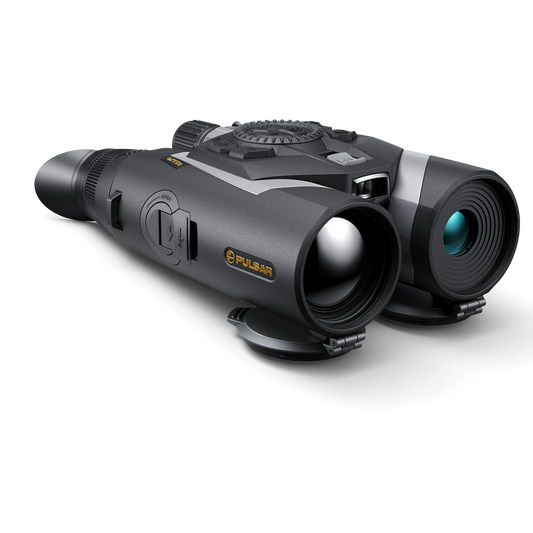
Telos LRF XT50 Monocular
Regular price $4,699.97Regular priceUnit price per -

 Sold out
Symbion LRF DXT50
Regular price $8,199.97Regular priceUnit price per -
Symbion LRF DXR50
Regular price $6,199.97Regular priceUnit price per -
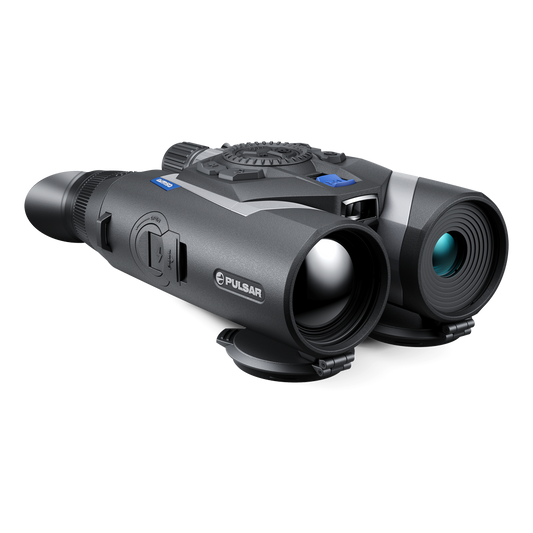
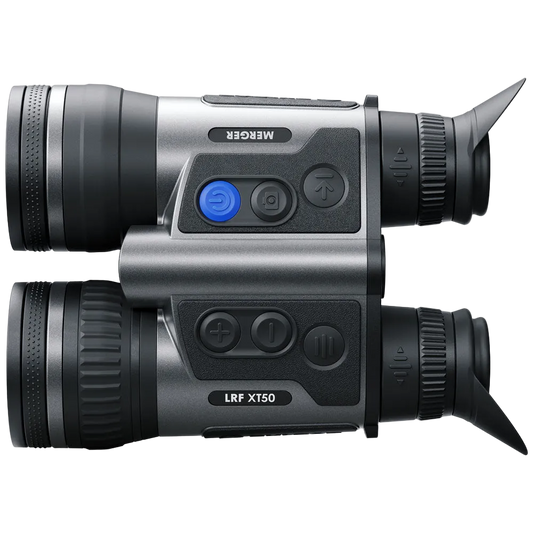
Merger LRF XT50 Thermal Binocular
Regular price $5,699.97Regular priceUnit price per -
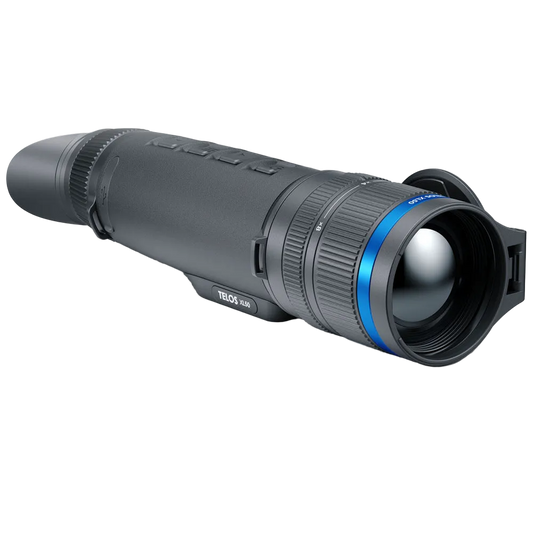
Telos XL50 Thermal Monocular
Regular price $4,199.97Regular priceUnit price per -
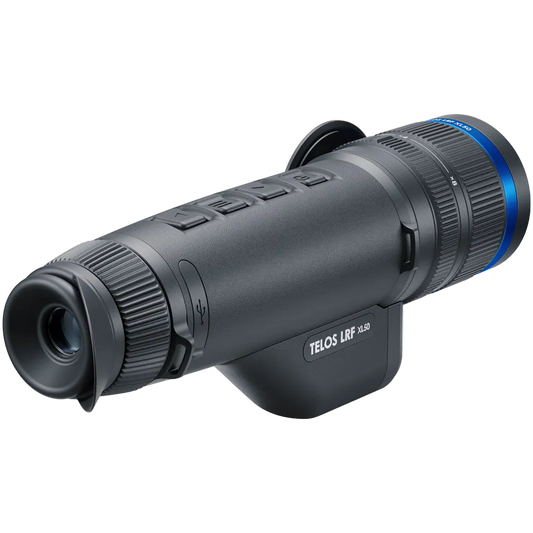
Telos LRF XL50 Thermal Monocular
Regular price $4,699.97Regular priceUnit price per





Premium Pulsar Thermal Handhelds — Flagship Monoculars and Binoculars
This is the top tier of Pulsar’s handheld range: the units built for people who spend whole nights behind thermal glass and need the image to hold up at the far end of it. Every model here carries an integrated laser rangefinder or a flagship-class sensor, and most carry both. If you are choosing your first thermal, start with the broader thermal monocular range — this page is where you land when reach and image quality matter more than price.
New to thermal? Start here:
Two formats sit side by side here. Monoculars (the Telos platform) are lighter, faster to deploy, and leave a hand free. Binoculars (Merger and Symbion) engage both eyes, which is the difference between glassing comfortably for hours and quitting early. Our format comparison guide walks through when each one wins.
The Symbion pair is worth calling out separately: these are multispectral units, pairing a thermal channel with a digital day/night channel in one housing, so you can detect with thermal and then switch to identify. Our thermal vs. night vision guide explains why that second channel exists.
Other offerings: for rifle-mounted thermal, explore our thermal riflescopes. For the full binocular range, see thermal binoculars. To add thermal to glass you already own, browse thermal clip-ons.
Buyer’s Guide: Choosing a Premium Thermal Handheld
At this tier the question is rarely "will it see far enough." It is how much detail you need at the far end, whether you want one spectrum or two, and how long you intend to hold it up.
Sensor Resolution
1280×1024 @ 12 µm (Telos LRF XT50, Symbion LRF DXT50, Merger LRF XT50) — the highest-resolution sensors Pulsar builds, and the ones that hold detail under digital zoom.
1024×768 @ 12 µm (Telos LRF XL50, Telos XL50) — HD detail with the same 2,515-yard reach.
640×480 @ 12 µm (Symbion LRF DXR50) — long reach with the line’s longest runtime.
640×480 @ 17 µm (Telos LRF XP50, Telos XP50) — proven mid- to long-range performance at the entry point of this tier.
Resolution alone does not decide what you can make out at distance — pixel pitch and sensor sensitivity matter just as much. See NETD explained.
Detection Range
Almost everything on this page reaches 2,515 yards; the XP50 models reach 1,969. At those distances the honest caveat matters more than the number: detection is not identification, and it is not an ethical shot. Read how far a thermal optic can really see before you buy on range alone.
One Spectrum or Two
The Symbion LRF DXT50 and DXR50 carry a thermal channel plus a digital day/night channel, switchable in the field. If your work involves deciding what something is — ranch management, research, anywhere a positive identification matters — that second channel is why you would carry the extra weight. Everything else on this page is thermal-only.
Laser Rangefinder
Every model listed here includes an integrated laser rangefinder. At this tier, ranging before you move to a riflescope is assumed rather than optional.
Weight and Runtime
The Telos monoculars are the lightest option at roughly 25 oz. The Merger LRF XT50 runs 32 oz and the Symbion pair 2.2 lb — the cost of two eyepieces and, on the Symbion, two sensors. Runtime moves the other way: the Symbion LRF DXR50 gives the longest night at 10 hours, the Merger LRF XT50 the shortest at 6.
Premium Handheld Model Comparison
| Model | Format | Sensor | Magnification | Detection Range | LRF | Best Use |
|---|---|---|---|---|---|---|
| Binoculars — both eyes, longest sessions | ||||||
| Symbion LRF DXT50 | Thermal + digital | 1280x1024 @ 12 µm | Thermal 2–24x / Digital 6.5–26x | 2,515 yd (2,300 m) | Yes | Detection and visual identification in one unit |
| Symbion LRF DXR50 | Thermal + digital | 640x480 @ 12 µm | 4–32x | 2,515 yd (2,300 m) | Yes | Highest magnification, longest runtime at 10 hrs |
| Merger LRF XT50 | Thermal binocular | 1280x1024 @ 12 µm | 2–16x | 2,515 yd (2,300 m) | Yes | Open-field predator hunting, maximum detail |
| Monoculars — lighter, faster, one hand free | ||||||
| Telos LRF XT50 | Monocular | 1280x1024 @ 12 µm | 2–16x (Zoom Boost 24x) | 2,515 yd (2,300 m) | Yes | Highest-resolution handheld monocular |
| Telos LRF XL50 | Monocular | 1024x768 @ 12 µm | 2.5–20x (x8 digital) | 2,515 yd (2,300 m) | Yes | Long-range scouting with precision ranging |
| Telos XL50 | Monocular | 1024x768 @ 12 µm | 2.5–20x (x8 digital) | 2,515 yd (2,300 m) | No | Same HD reach without the rangefinder |
| Telos LRF XP50 | Monocular | 640x480 @ 17 µm | 2.5–10x (x4 zoom) | 1,969 yd (1,800 m) | Yes | Balanced all-around detection and ranging |
| Telos XP50 | Monocular | 640x480 @ 17 µm | 2.5–10x (x4 zoom) | 1,969 yd (1,800 m) | No | Entry point into the premium tier |
Browse by family: Telos, Merger, Symbion, or the full monocular and binocular ranges.
Extended Use Cases
Night Hunting and Scouting
- Locate hogs and predators before setting up a shot.
- Range the animal before you move, not after.
- Scan wide areas without raising a rifle at anything.
Property Surveillance and Ranch Management
- Monitor fences, livestock, and distant terrain without visible light.
- Record movement patterns for security or wildlife study.
- On Symbion models, switch to the digital channel to identify what you found.
Long Observation Sessions
- Binocular formats reduce eye strain across multi-hour sits.
- Plan runtime around the unit: 6 hours on the Merger XT50, 10 on the Symbion DXR50.
- Record footage to review terrain and patterns later.
Tips for Getting the Most From a Premium Handheld
- Scan at low magnification — zooming narrows field of view fast, and these units have plenty in reserve.
- Adjust focus frequently; at 2,500 yards fine focus is the difference between a blob and an animal.
- Switch palettes as terrain and humidity change. Contrast is not fixed.
- Keep the objective clean — smudges cost more range than any setting.
- Carry a spare battery pack. Runtime figures assume moderate temperatures.
Frequently Asked Questions
What makes these different from the standard handheld range?
Reach, sensor class, and ranging. Everything here detects to at least 1,969 yards and carries an integrated LRF, and most use Pulsar’s 12 µm sensors. The trade is weight and price.
Should I choose a monocular or a binocular?
A monocular is lighter, quicker to bring up, and leaves a hand free. A binocular engages both eyes, which matters when you glass for hours. See our format guide.
What is a multispectral unit?
The Symbion LRF DXT50 and DXR50 carry both a thermal sensor and a digital day/night sensor. Thermal finds the heat; the digital channel tells you what it is. Thermal vs. night vision covers the difference.
How far can these actually detect animals?
Up to 2,515 yards on most models here. That is detection of a heat source, not identification of a species. Detection range explained.
Can they be used during the day?
Yes. Thermal reads heat, not visible light, so it works in full sun, shade, or total darkness. How thermal imaging works.