


-
Thermion 2 LRF XG60 Thermal Riflescope
Regular price $4,499.97Regular priceUnit price per$5,499.97Sale price $4,499.97Sale -
Thermion 2 LRF XP60 Thermal Riflescope
Regular price $4,499.97Regular priceUnit price per$5,499.97Sale price $4,499.97Sale -
Trail 3 LRF XR50 Thermal Riflescope
Regular price $4,499.97Regular priceUnit price per -
Trail 3 LRF XQ50 Thermal Riflescope
Regular price $3,199.97Regular priceUnit price per -
Thermion 2 LRF XL50 Thermal Riflescope
Regular price $5,499.97Regular priceUnit price per$6,999.97Sale price $5,499.97Sale -
Thermion 2 XG50 Thermal Riflescope
Regular price $4,199.97Regular priceUnit price per

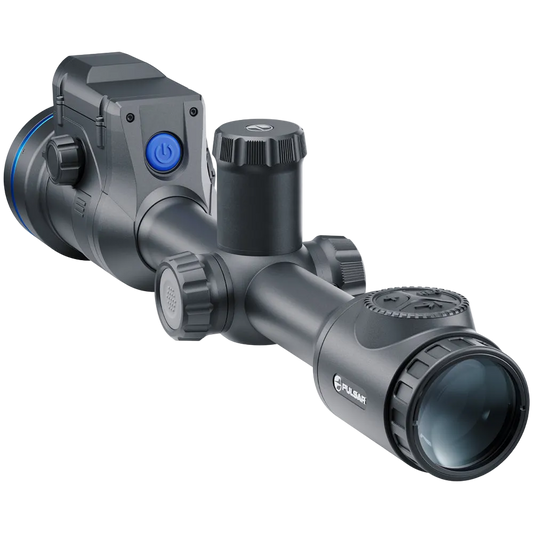

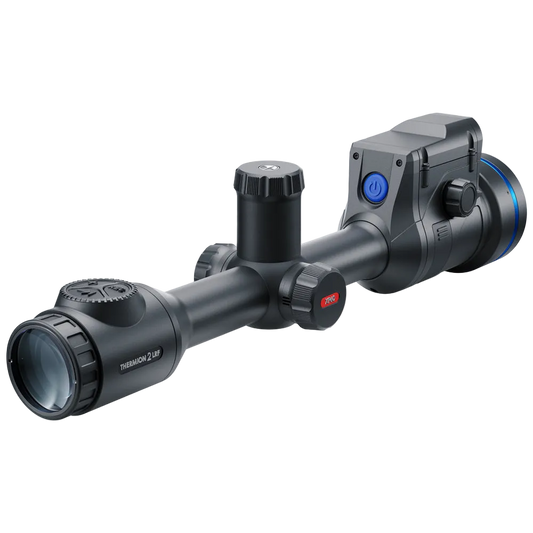



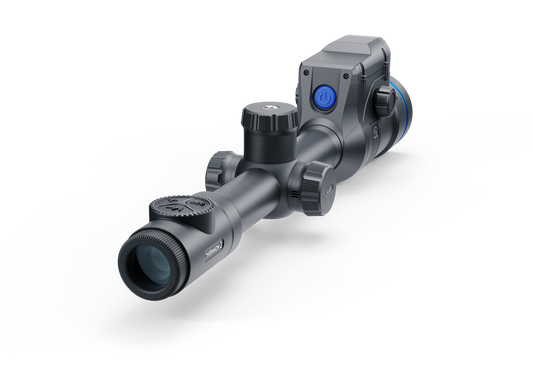

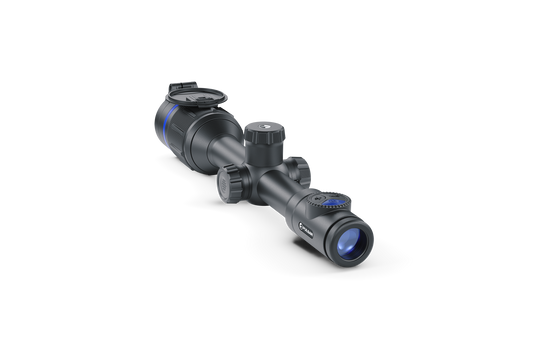
Pulsar Thermal Riflescopes for Night Hunting and Long-Range Precision
Pulsar thermal riflescopes are built for one job: letting you see what’s actually out there when light, weather, or terrain make traditional optics useless. Whether you’re dealing with hogs after dark, watching a tree line at first light, or confirming a target beyond normal visibility, thermal riflescopes give you information you can’t get any other way.
New to thermal? Start here:
Three families sit in this category. Thermion 2 is the flagship line, from 35 mm PRO models up to the 60 mm long-range scopes. Trail 3 pairs a wide field of view with integrated ranging. Talion is the lighter, more affordable platform for general night hunting. New to thermal? Start with our complete thermal scope buying guide.
If you want to scan without pointing a rifle, take a look at our thermal monoculars — most hunters carry both, and our scope vs. monocular guide explains why. For extended observation, our thermal binoculars may make more sense. If you already have a preferred optic, thermal clip-on attachments let you add thermal capability without re-zeroing.
How to Choose the Right Thermal Riflescope
Most mistakes come from buying too much magnification or ignoring how the scope will actually be used. Start by thinking about distance, terrain, and how often you’ll be shooting versus scanning.
Sensor Resolution
A 640×480 @ 12 µm sensor — found in the Thermion 2 XG50, Thermion 2 LRF XG60, and Talion XG35 — offers a strong balance of clarity and range for most hunters. The 1024×768 @ 12 µm sensor in the Thermion 2 LRF XL50 and XL60 pushes identification farther, especially when you’re sorting animals from background heat at distance. 384×288 @ 17 µm models like the Thermion 2 XQ35 PRO and Talion XQ35 PRO keep weight and cost down for shorter ranges.
Pixel pitch matters as much as pixel count: a 12 µm sensor resolves more detail at range than a 17 µm sensor of the same resolution. Our NETD explained guide covers how sensor sensitivity affects what you can actually make out.
Magnification
High magnification looks appealing on paper, but thermal image quality drops quickly if you over-zoom. Many hunters spend most of their time between 2x and 6x, even on scopes capable of much more. Digital zoom is best used sparingly, not as a crutch.
Detection Range
Detection in this category runs from 1,476 yards on the 35 mm PRO models to 3,062 yards on the 60 mm Thermion 2 scopes. Detection is not identification, and it is not an ethical shot. Understanding the gap between the two is the single most useful thing you can learn before buying — read how far a thermal scope can really see.
Laser Rangefinders
Any model with LRF in its name has an integrated laser rangefinder, which removes guesswork at distance. If you’re shooting past 200 yards at night, an LRF saves time and prevents bad holdover decisions.
Features
Onboard recording is useful for reviewing shots and tracking movement patterns over time. Multiple color palettes help when the ground is heat-soaked or animals blend into the background. WiFi support makes it easier to check footage without pulling the scope off the rifle.
Use Case Scenarios
Thermal riflescopes detect heat differences, not light. That means they keep working in total darkness, fog, light rain, or smoke — conditions where traditional optics struggle or fail outright. If you’re weighing thermal against image intensification, our thermal vs. night vision comparison lays out where each one wins.
- Spot animals hidden in brush, shadows, or uneven terrain
- Confirm whether a target is moving or stationary
- Track heat signatures after a shot
- Maintain visibility when ambient light disappears
Hunting something specific? See our setup guides for hog hunting and coyote hunting.
Thermal Riflescope Comparison
| Model | Sensor | Magnification | Detection Range | LRF | Best Fit |
|---|---|---|---|---|---|
| Thermion 2 — 60 mm long-range flagship | |||||
| Thermion 2 LRF XL60 | 1024x768 @ 12 µm | 2.5–20x | 3,062 yd (2,800 m) | Yes | Maximum identification detail at extreme range |
| Thermion 2 LRF XG60 | 640x480 @ 12 µm | 4–32x | 3,062 yd (2,800 m) | Yes | Highest magnification, open-country precision |
| Thermion 2 LRF XP60 | 640x480 @ 17 µm | 3–24x | 2,187 yd (2,000 m) | Yes | 60 mm reach at a lower entry point |
| Thermion 2 — 50 mm and 35 mm | |||||
| Thermion 2 LRF XL50 | 1024x768 @ 12 µm | 1.75–14x | 2,515 yd (2,300 m) | Yes | HD detail with the widest low-end field of view |
| Thermion 2 LRF XG50 | 640x480 @ 12 µm | 3–24x | 2,515 yd (2,300 m) | Yes | Long-range hunting with integrated ranging |
| Thermion 2 XG50 | 640x480 @ 12 µm | 3–24x | 2,500+ yd | No | Long-range hunting with flexible magnification |
| Thermion 2 LRF XP50 PRO | 640x480 @ 17 µm | 2–16x | 1,969 yd (1,800 m) | Yes | Balanced all-around scope with ranging |
| Thermion 2 XP50 PRO | 640x480 @ 17 µm | 2–16x | 1,969 yd (1,800 m) | No | Proven all-around performance |
| Thermion 2 LRF XQ50 PRO | 384x288 @ 17 µm | 3–12x | 1,969 yd (1,800 m) | Yes | Mid-range hunting with ranging |
| Thermion 2 XQ50 PRO | 384x288 @ 17 µm | 3–12x | 1,969 yd (1,800 m) | No | Mid-range value in the Thermion chassis |
| Thermion 2 XQ35 PRO | 384x288 @ 17 µm | 2.5–10x | 1,476 yd (1,350 m) | No | Wider field of view for timber and close cover |
| Trail 3 — wide field of view with ranging | |||||
| Trail 3 LRF XR50 | 640x480 | 3–24x | 2,515 yd (2,300 m) | Yes | Long-range detection with fast target acquisition |
| Trail 3 LRF XQ50 | 384x288 | 3.5–14x | 1,969 yd (1,800 m) | Yes | Mid-range hunting, lighter carry |
| Talion — lightweight general-purpose | |||||
| Talion XG35 | 640x480 @ 12 µm | 2–16x | 1,914 yd (1,750 m) | No | General-purpose night hunting |
| Talion XQ35 PRO | 384x288 @ 17 µm | 2.5–10x | 1,476 yd (1,350 m) | No | Entry point into the Talion platform |
Browse by family: Thermion, Trail, Talion, or the Thermion 2 LRF 60mm series.
Common Use Cases
Night Hunting
- Spot hogs and coyotes by heat before darkness or cover hides them
- Use thermal image palettes to separate animals from background heat
- Scan wide fields and thick cover before transitioning to the riflescope
Long-Range Shooting
- Range animals accurately when distance is harder to judge than it looks
- Understand how terrain, fog, rain, and heat contrast affect thermal performance
- Use laser rangefinding and ballistic tools to reduce holdover guesswork
Practical Tips From the Field
- Zero your thermal riflescope with heat-visible targets and saved distance profiles
- Choose magnification and lens size around field of view, terrain, and hunting distance
- Understand how objective lens size affects magnification, field of view, and detection range
- Carry spare batteries and keep them warm during cold-weather hunts
Frequently Asked Questions
Can thermal riflescopes be used during the day?
Yes. Thermal scopes detect heat, not light, so they work in daylight, shade, and complete darkness. How thermal imaging works.
Do thermal riflescopes replace night vision?
They solve different problems. Thermal excels at detection and tracking; night vision can be better for navigation and fine detail in some environments. Our full comparison covers the trade-offs.
What does the model name actually mean?
The letters describe sensor class and the number is the objective lens in millimetres — so XG50 is a 640×480 12 µm sensor behind a 50 mm lens. LRF means an integrated rangefinder. Larger objectives detect farther but narrow the field of view.
Is a thermal riflescope hard to use?
Most users adapt quickly. The biggest learning curve is understanding how heat behaves in different terrain and weather.
